

The Fife Arms
Book Book
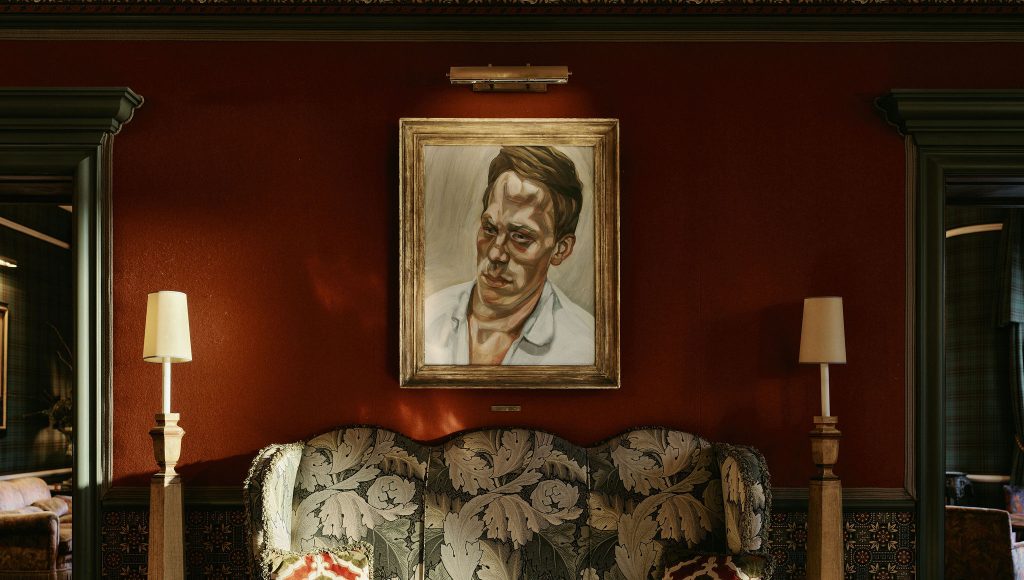
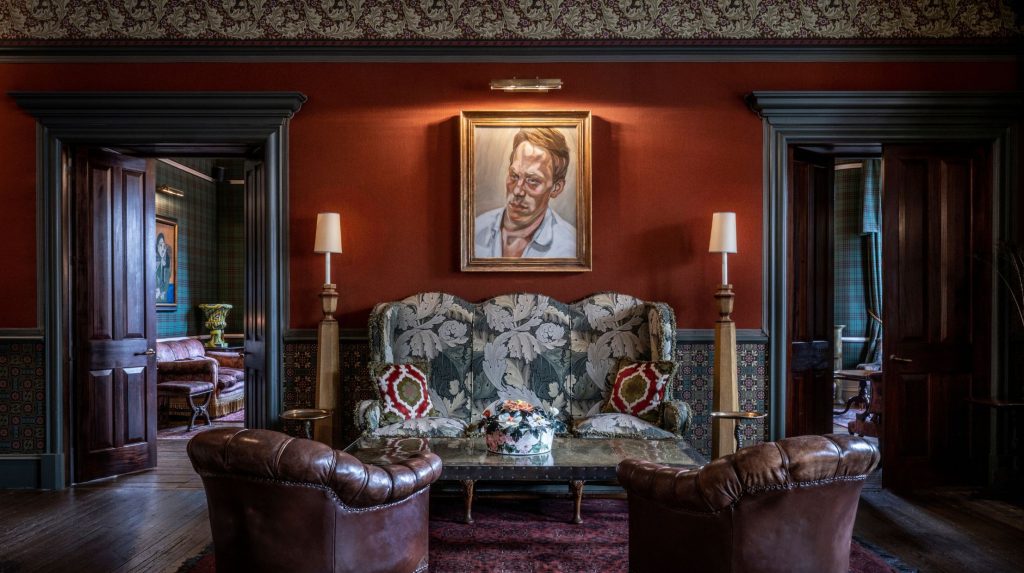
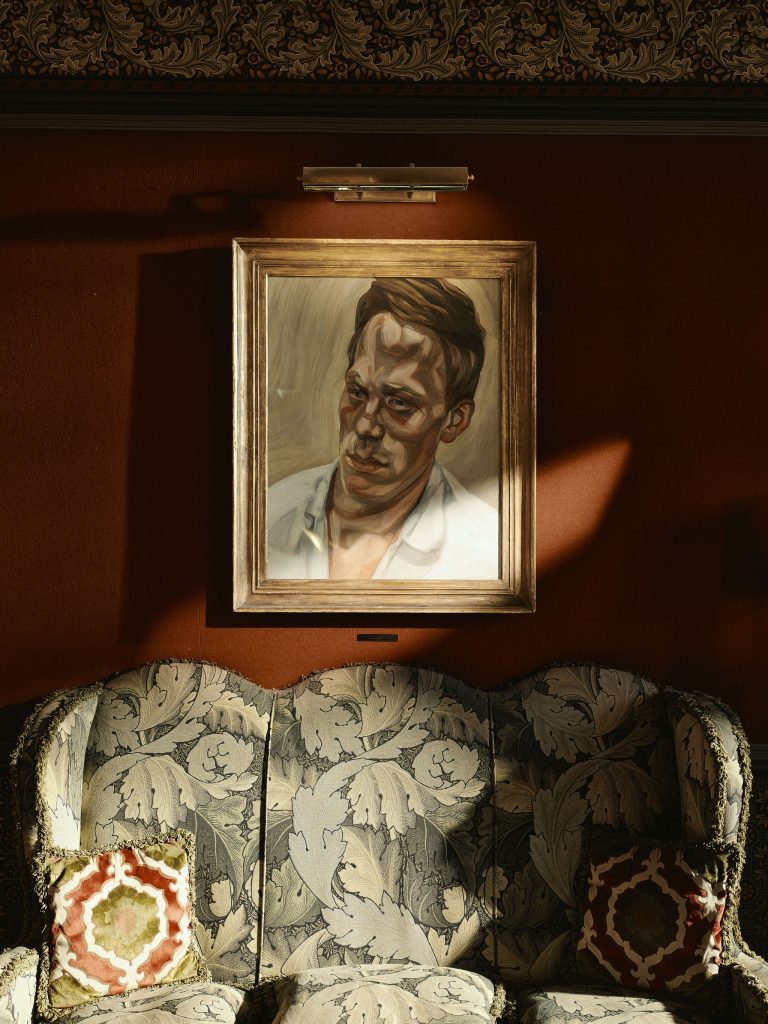
Lucian Freud portrait in the lobby

Hotel Collection

Art is central to the Fife Arms experience. In keeping with its Victorian style, the hotel collection presents an eclectic mix of over 16,000 pieces, from landscapes and society portraits to abstract contemporary works.

H.M. Queen Victoria (1819 – 1901)

A stag shot by John Brown, 6 October, 1874, pencil and watercolour heightened with touches of white, on paper watermark J.Whatman/ Turkey Mill/18, 25.4 x 19 cm - lobby

H.M. Queen Victoria was a proficient and studious amateur artist, beginning drawing lessons from the age of eight. She initially copied drawings, as instructed by her tutor, but she soon started to sketch not only the various members of the Household at Kensington Palace and visiting relations, but the scenery and locations that she observed on annual holidays away from London. What had begun as a childhood amusement became a source of lifelong pleasure which she was later able to share with Prince Albert, who also took pleasure in drawing. Sketching became a favourite occupation, particularly on the royal couple’s summer visits to the Highlands of Scotland.
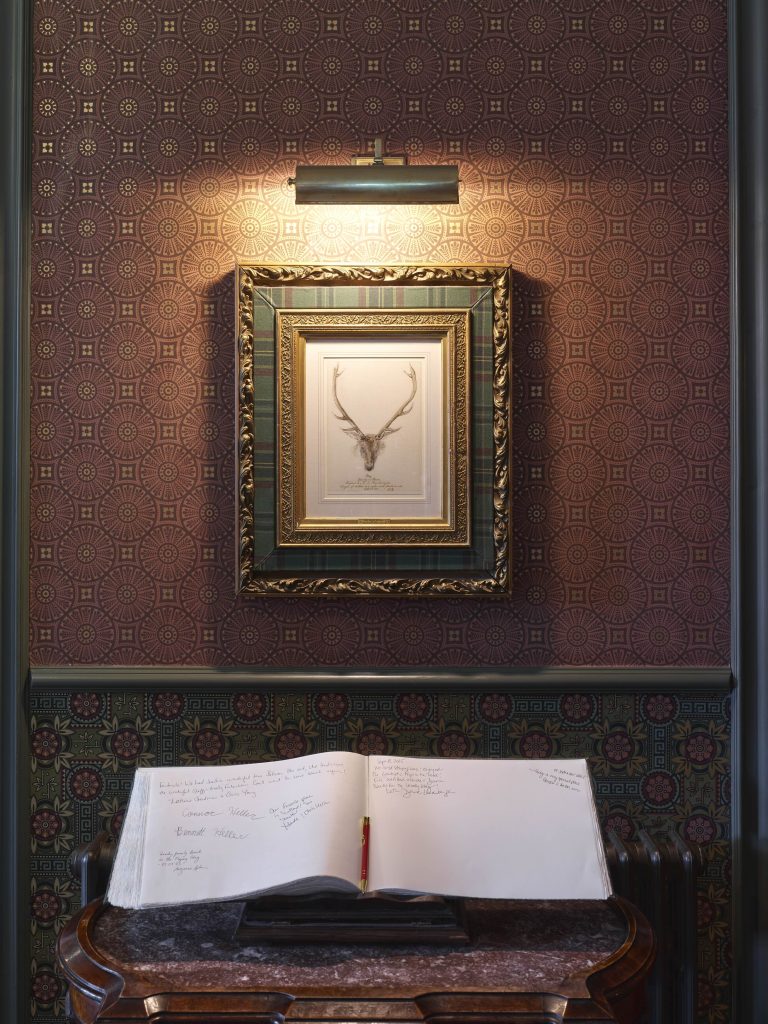
A watercolour by Queen Victoria, of a stag shot by her Ghillie John Brown

Pablo Picasso (1881 – 1973)

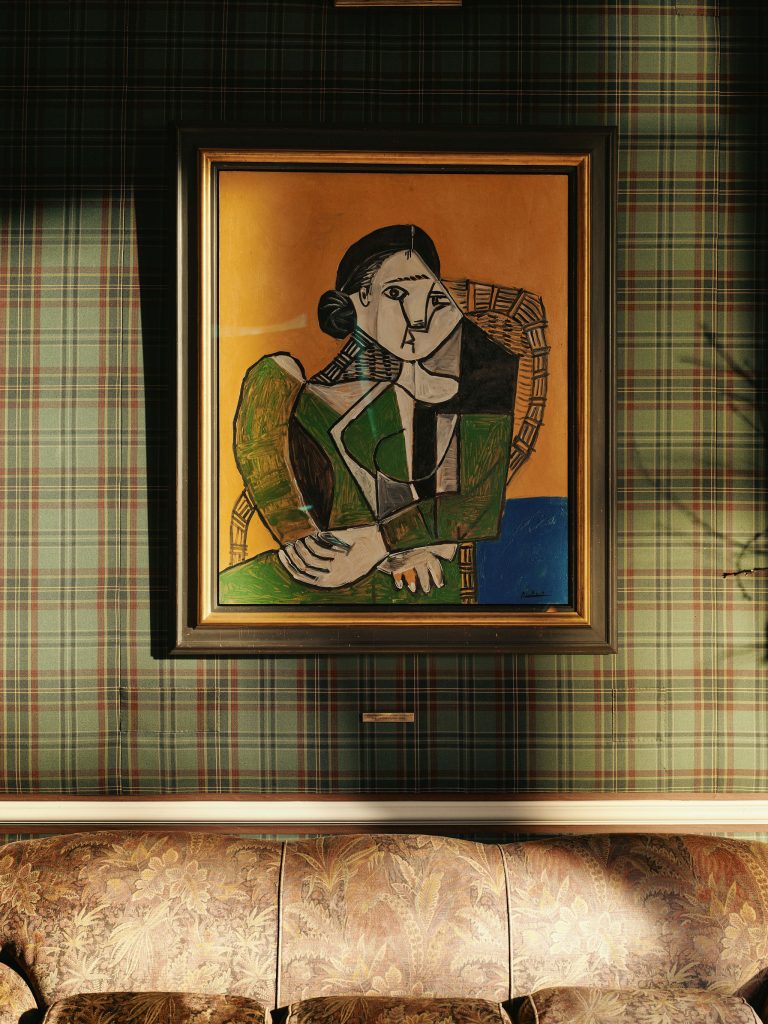
Femme assise dans un fauteuil, 1953, oil on panel, 100 x 80cm - drawing room

Pablo Picasso’s ‘Femme assise dans un fauteuil (Woman seated in an armchair)’, painted on March 5, 1953, takes Françoise Gilot as its subject. The artists began a romantic relationship in 1946, when Françoise, forty years Picasso’s junior, was already a respected member of the School of Paris. This striking portrait dates from the final months of their relationship. Picasso made hundreds of paintings with Françoise as his muse over the course of their partnership. Early on in the relationship, Picasso depicted her as a buxom nymph with luscious masses of hair. The 1953 portrait, however, conveys a passion gone cold. Though Françoise was still in her twenties when the work was painted, ‘Femme assise dans un fauteuil’ presents a noticeably older, elegantly self-possessed woman at an emotional distance.

Pablo Picasso's Femme assise dans un fauteuil (Woman seated in an armchair) hung on the wall in the Drawing Room

Lucian Freud (1922 – 2011)

A Painter, Redheaded Man No. II, 1962, 91.5 x 71.1cm, oil on canvas - lobby

Hanging above the sofa in the lobby is a work by one of the foremost artists of the 20th century, Lucian Freud. Freud was born in Berlin, the grandson of the famous psychoanalyst Sigmund Freud, but grew up in England after his family fled from Nazi Germany to Britain in the 1930s. Freud is best known for his portraits (including many self-portraits), which have an intensity and directness to them. He worked in a realist and highly expressive style, using layers of paint and visible brushstrokes to render the tones of the sitter’s flesh. In this portrait, Freud is demonstrating the physical, almost three-dimensional use of paint that would come to characterise his works from the 1960s onwards. This portrait is of artist Tim Behrens, who in the 1960s, along with Freud and Francis Bacon, was part of a bohemian and intellectual circle known as the ‘School of London.’

Lucien Freud's painting hung on the orange wall of the hotel lobby

Mark Bradford & Robert Glasper

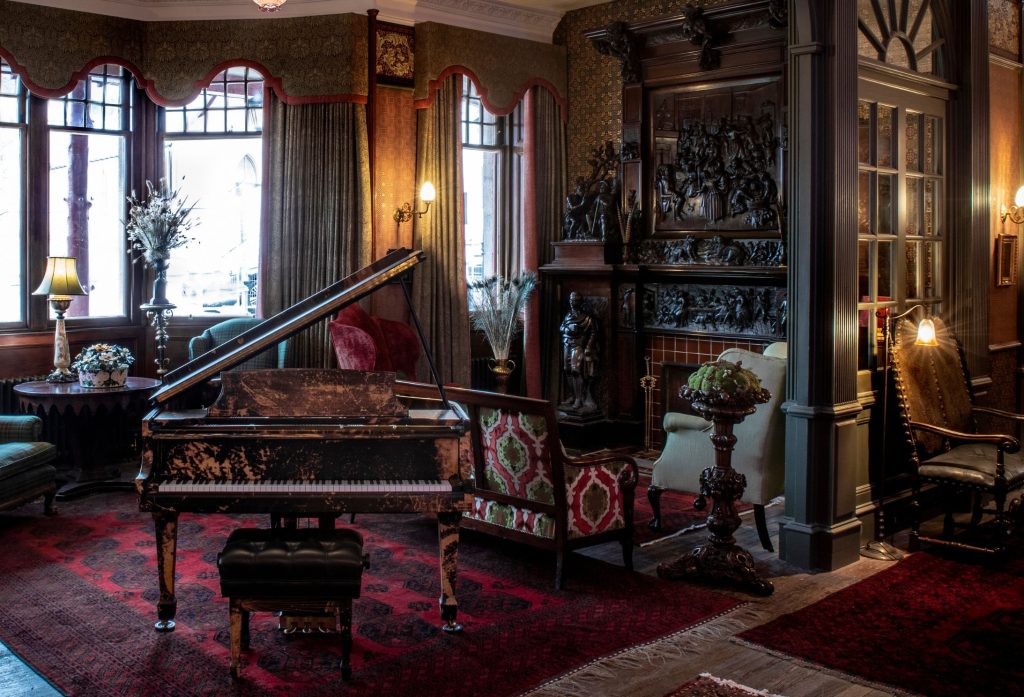
Apollo/Still Shining, 2015 Steinway Spirio player piano programmed with Robert Glasper’s score, ‘Still Shining’, mixed media 101.6 x 146.6 x 170.1 cm (closed) 175.2 x 146.6 x 170.1 cm (open) - lobby

Mark Bradford is a Los Angeles based artist. ‘Apollo/Still Shining’, was a collaboration with the piano maker Steinway & Sons and the composer Robert Glasper. Bradford used bleach and translucent squares of paper, used to wrap hair when getting a permanent curl treatment on the surface of the piano. Burning and bleaching the papers he collaged them onto the surface to give the piano a flaming appearance. Bradford explained, ‘My use of paper and bleach in the work originates from my time working as a hairdresser at my mother’s salon in Leimert Park, Los Angeles […] Here, I am interested in the pattern of flux created by this bleaching effect.

The Steinway piano in the lobby

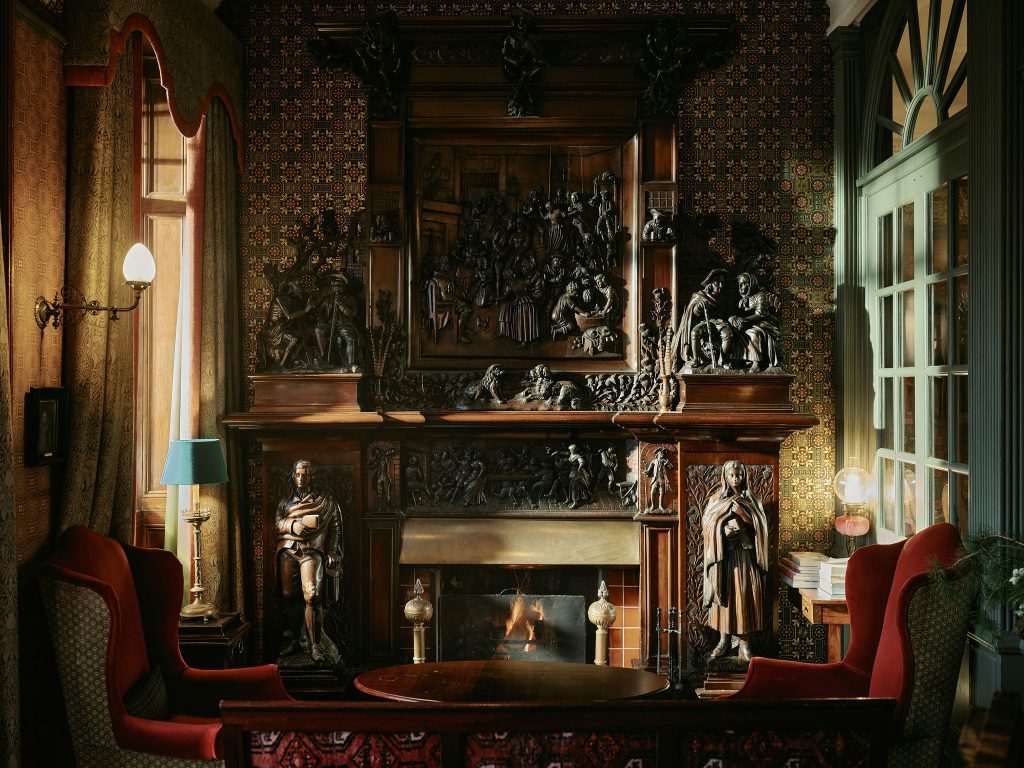
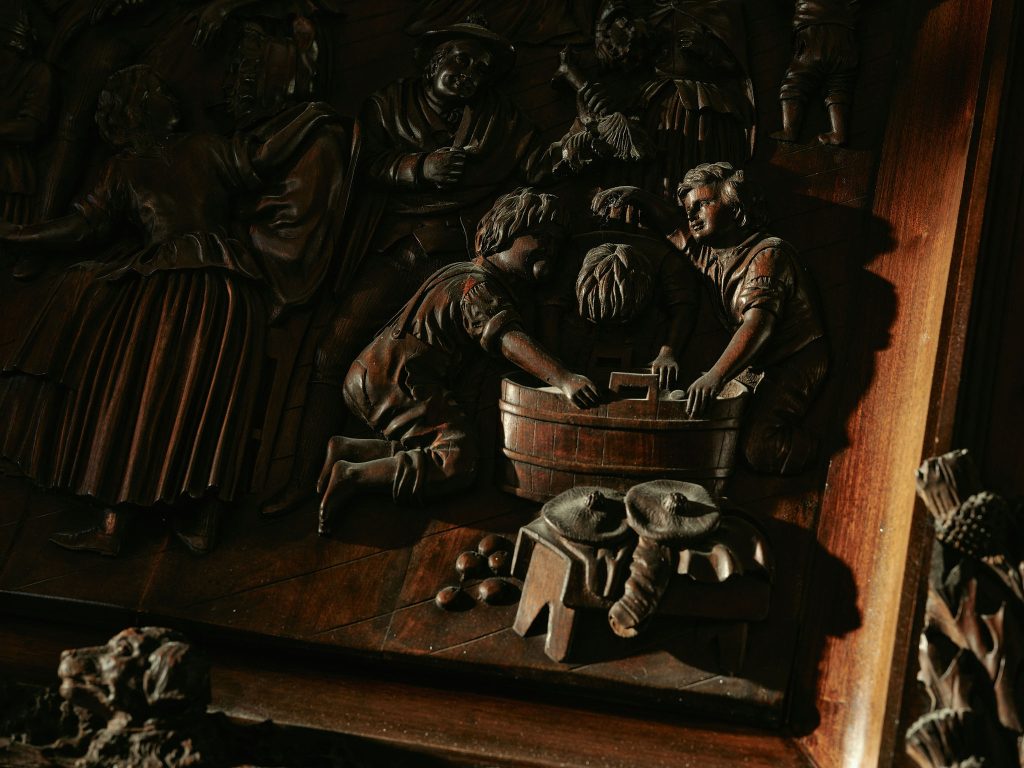
Robert Burns’ Chimney-Piece

Removed From Montrave House, Leven, Fife Attributed To Gerrard Robinson, Newcastle Carved overall with depictions of various scenes from the work of Robert Burns, 19th Century 300 x 65 x 362 cm, internal aperture 125cm wide, 125cm high - lobby

The chimney-piece was purchased by Sir John Gilmour, 1st Baronet DL (1845-1920) of Montrave House, Leven, Fife. By family tradition, it was thought to have been carved in Newcastle or Northumberland. It was later attributed to Gerrard Robinson after the appearance of a photograph of it in The Sunday Post newspaper on 22nd January 1995. This monumental chimney-piece depicts various scenes from the works of Robert Burns.

Martin Creed (b. 1968)

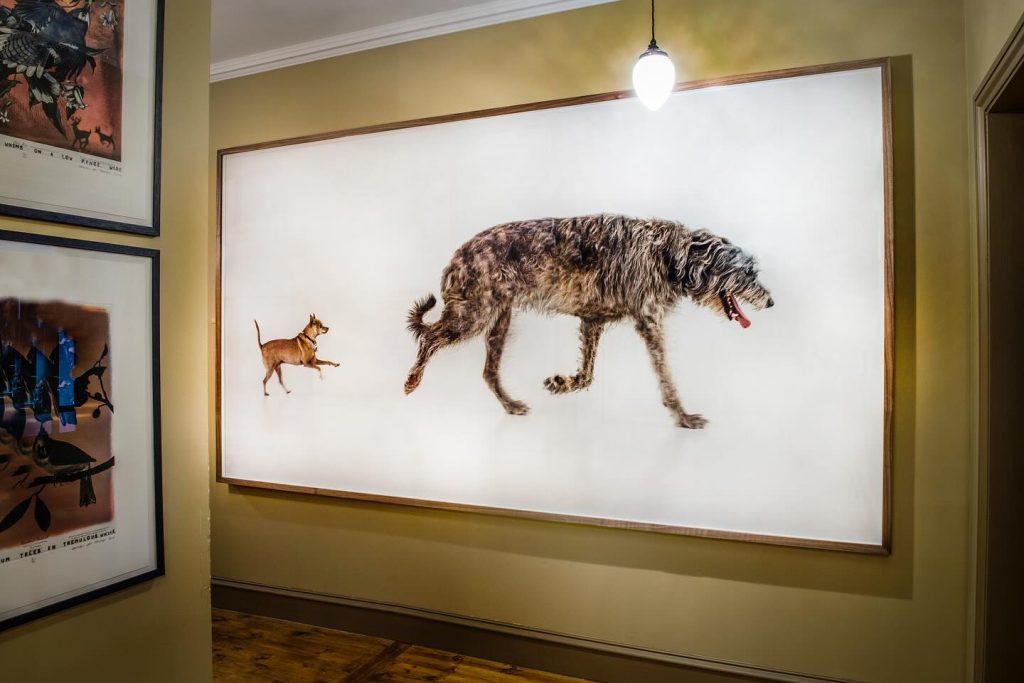
Work No. 1094, 2011 Photographic print Edition of 3 + 1 AP 163.5 x 298.5 cm - corridor leading to Bertie's Whisky Bar

Martin Creed is an acclaimed UK contemporary artist and 2001 Turner Prize winner. Creed works in an array of media including sculpture, painting, installation, choreography, and music. Questioning the definition of art with a playful, deadpan and logical approach to conceptual minimalism. Creed favours opposites. Work No. 1094 features an Irish Wolfhound and Chihuahua – opposites indeed. Creed found a wonderful humour in the pair, describing them as ‘a perfect sculpture’. For the artist the two dogs represented ‘thinking’ the small dog and ‘not thinking’ the large dog.

Painting of dog by Martin Creed on white background in corridor

Circle of Pieter Brueghel the Younger (1564 – 1636)

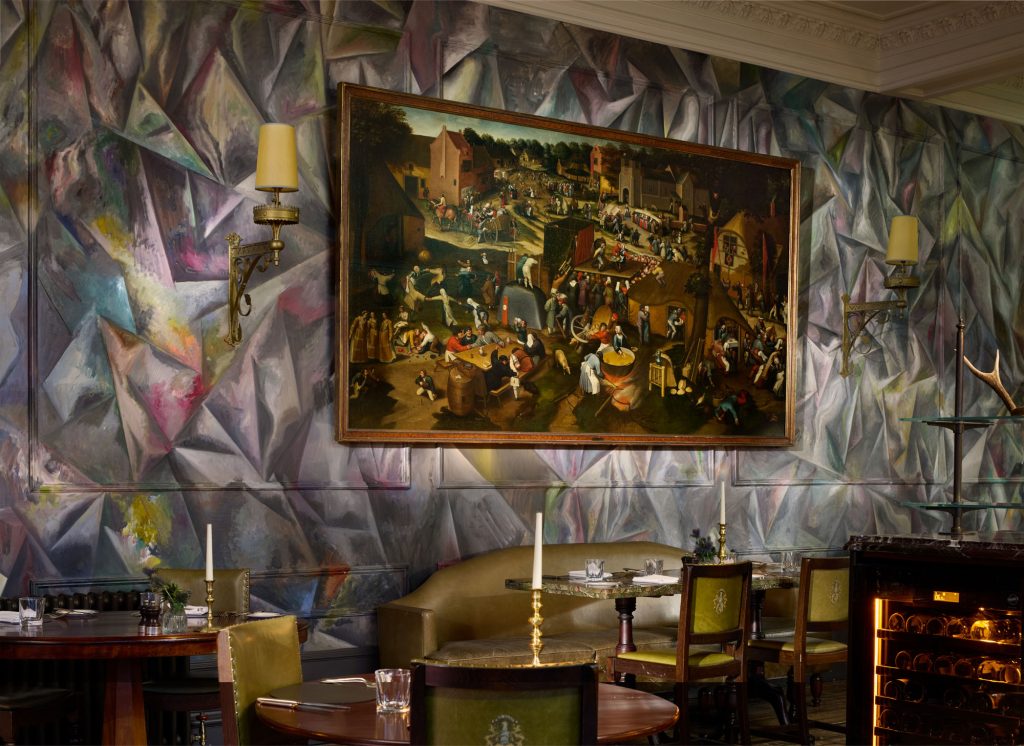
A grand village kermesse with a performance of the farce Een Cluyte Van Plaeyerwater (‘A Clod From A Plaeyerwater’) and a religious procession, oil on canvas - 153.5 x 286.5 cm - The Clunie Dining Room

Pieter Brueghel the Younger was a Flemish painter known for his depictions of peasant life in rural settings. Like his father, Pieter Bruegel the Elder, the artist painted compositions filled with details that often included multiple narratives happening simultaneously. Suffering financial difficulties throughout his career, the artist often made inexpensive copies of his father’s paintings to support himself. Despite this, he was admired by his peers which included Anthony van Dyck and Peter Paul Rubens. ‘A Village Kermesse With A Performance Of The Farce Een Cluyte Van Plaeyerwater (‘A Clod From A Plaeyerwater’), And A Religious Procession’ depicts at its centre villagers gathering around a makeshift theatre to watch the denouement of the farce, when the cuckolded husband reveals himself to his unfaithful wife and her lover, the local priest.

Circle Of Pieter Brueghel The Younger (1564 – 1636) in painted room with tables and chairs

Joseph Farquharson (1846 – 1935)

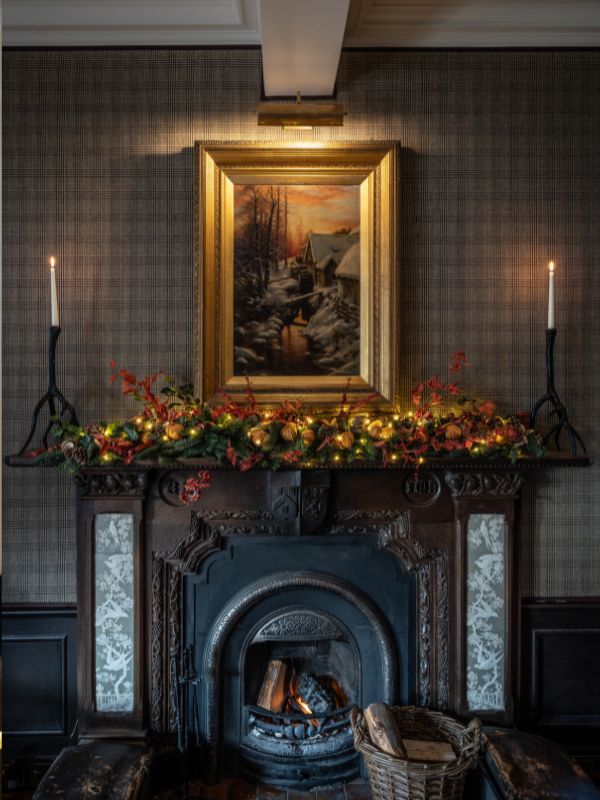
The Silence of the Snow, oil on canvas, 76.2 x 50.8 cm - the snug in the Flying Stag

Joseph Farquharson was a Scottish painter, widely known for his snowy wintry landscapes often featuring sheep, in the glowing light of dawn and dusk. Farquharson had a long a prolific career as an artist, painting in both oil and watercolour and often using the Farquharson family Estate of Finzean in rural Aberdeenshire as his subject matter and inspiration. Farquharson’s detailed and realistic style was achieved through his technique of painting en plein air (out of doors) often using a specially converted shepherd’s hut on wheels with its own stove and large window which could be moved around the local landscape. He also used a flock of ‘fake’ sheep to bolster some of his landscape scenes, and the popularity of these works earned him the nicknames of ‘Frozen Mutton Farquharson’ and ‘The Painting Laird’. The Silence of the Snow, is a wonderful example of Farquharson’s skill in rendering wintery scenes full of character and atmosphere, with the warm glow of the evening sky complimenting the rich tones of the snug and its fireside location.

Artwork above the fireplace in the snug of the Flying Stag

Man Ray (1890 – 1976)

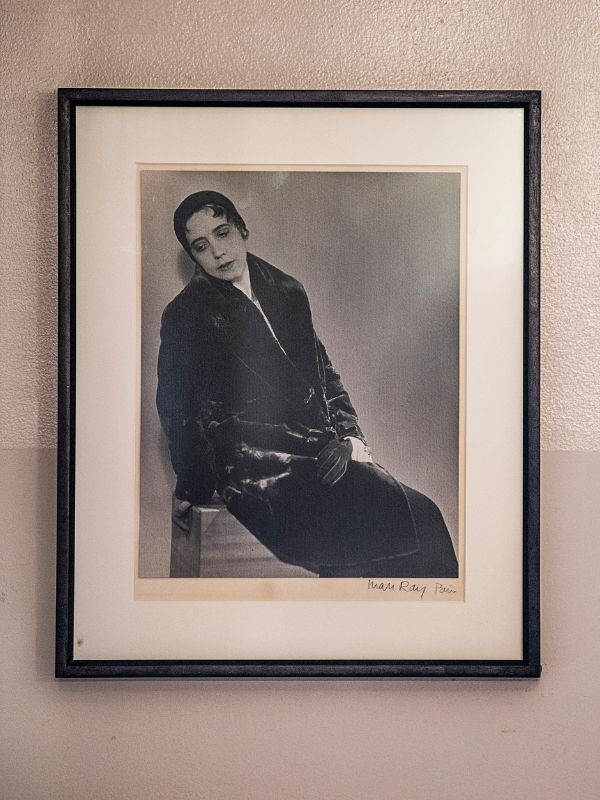
Elsa Schiaparelli, 1931, gelatin silver print mounted on cardboard - Elsa‘s Cocktail Bar

Born Emmanuel Radnitzky, Man Ray adopted his pseudonym in 1909 and would become one of the key figures of Dada and Surrealism. Man Ray’s photographic works are considered his most profound achievement, particularly his portraits, fashion photographs, and technical experiments with the medium, such as solarization and rayographs. ‘I do not photograph nature,’ he once said. ‘I photograph my visions.’ The series of photographs displayed in Elsa’s Cocktail Bar portray the bar’s namesake, Italian fashion designer Elsa Schiaparelli, whose bravado and unrestrained originality was influenced by her friendships with Surrealist artists of the period, most notably Salvador Dali. The photographs were taken by Man Ray when Elsa was first beginning to become well known in Paris as a trail-blazing couturier, with Man Ray turning her into an advertisement for her own designs.

Man Ray photograph of Elsa Schiaparelli hung in our Elsa's cocktail bar

Hans Bellmer (1902 – 1975)

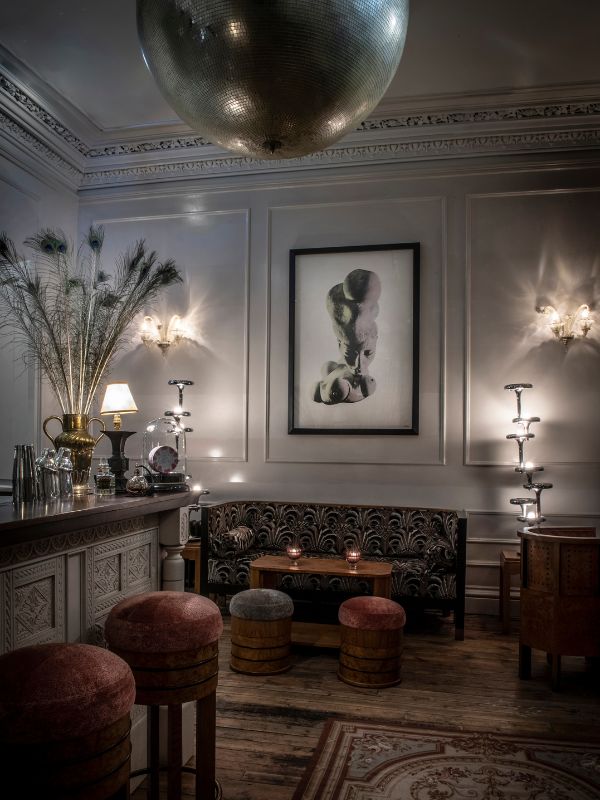
Nous la suivons à pas lents (We Follow Her with Slow Steps), 1937 (printed 1963), hand-coloured gelatin silver print mounted on original masonite Unique variant, 148 x 100 cm - Elsa‘s Cocktail Bar

Hans Bellmer was a German Surrealist artist. He created an emotional, intellectual and erotically charged body of work. Bellmer is best known for a series of photographs of two life-sized adolescent female dolls which he constructed and photographed between 1934 and 1938. Bellmer’s ‘Nous la suivons à pas lents (We Follow Her with Slow Steps)’ is a black-and-white photograph, with delicate hand coloured hues of pale yellow/green and pink.

Hans Belmer print hung in Elsa's Cocktail Bar

Keith Tyson (b. 1969)

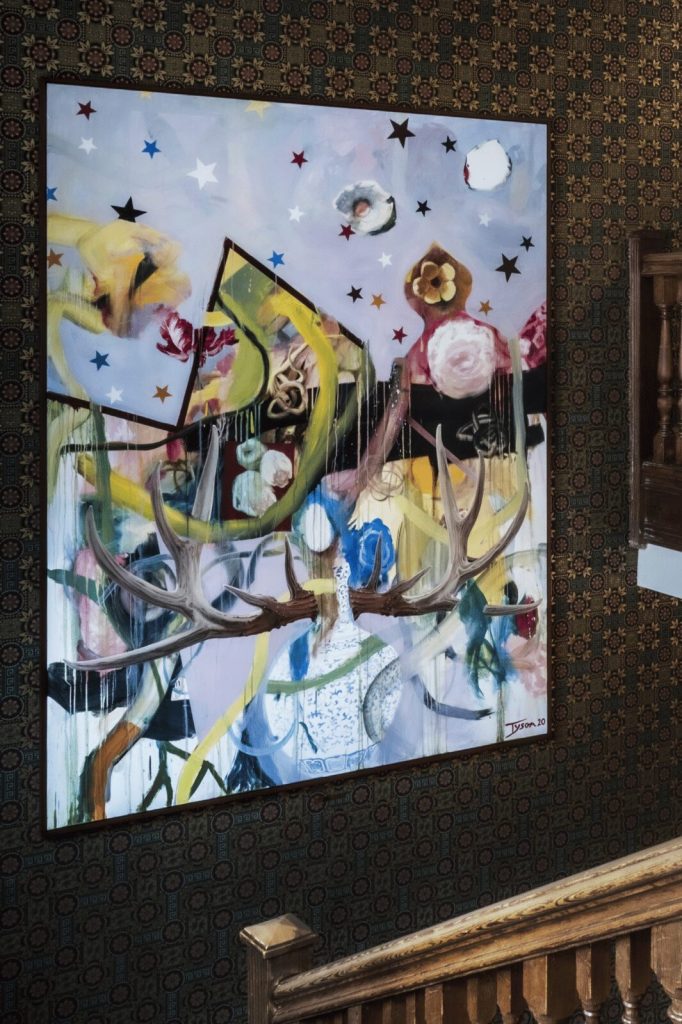
Still Life with Stars and Antlers, 2020, oil on aluminium, 244cm x 187.7cm (unframed) - staircase

Keith Tyson is a British artist who incorporates systems of logic, scientific methodology and the phenomenon of chance into his work. He actively resists developing a singular style, preferring to embrace a diversity of stylistic and thematic influences ranging from poetry and mathematics, to history and computer coding. Seeing the world essentially as a vast source of interconnecting elements, Tyson’s imagery draws repeatedly from complexity of contemporary culture and society, art history and the artist’s direct experience of the world around him to create multi-layered and highly visual works with their own distinct beauty.

Keith Tyson artwork hung on the first floor staircase of the Fife Arms hotel